


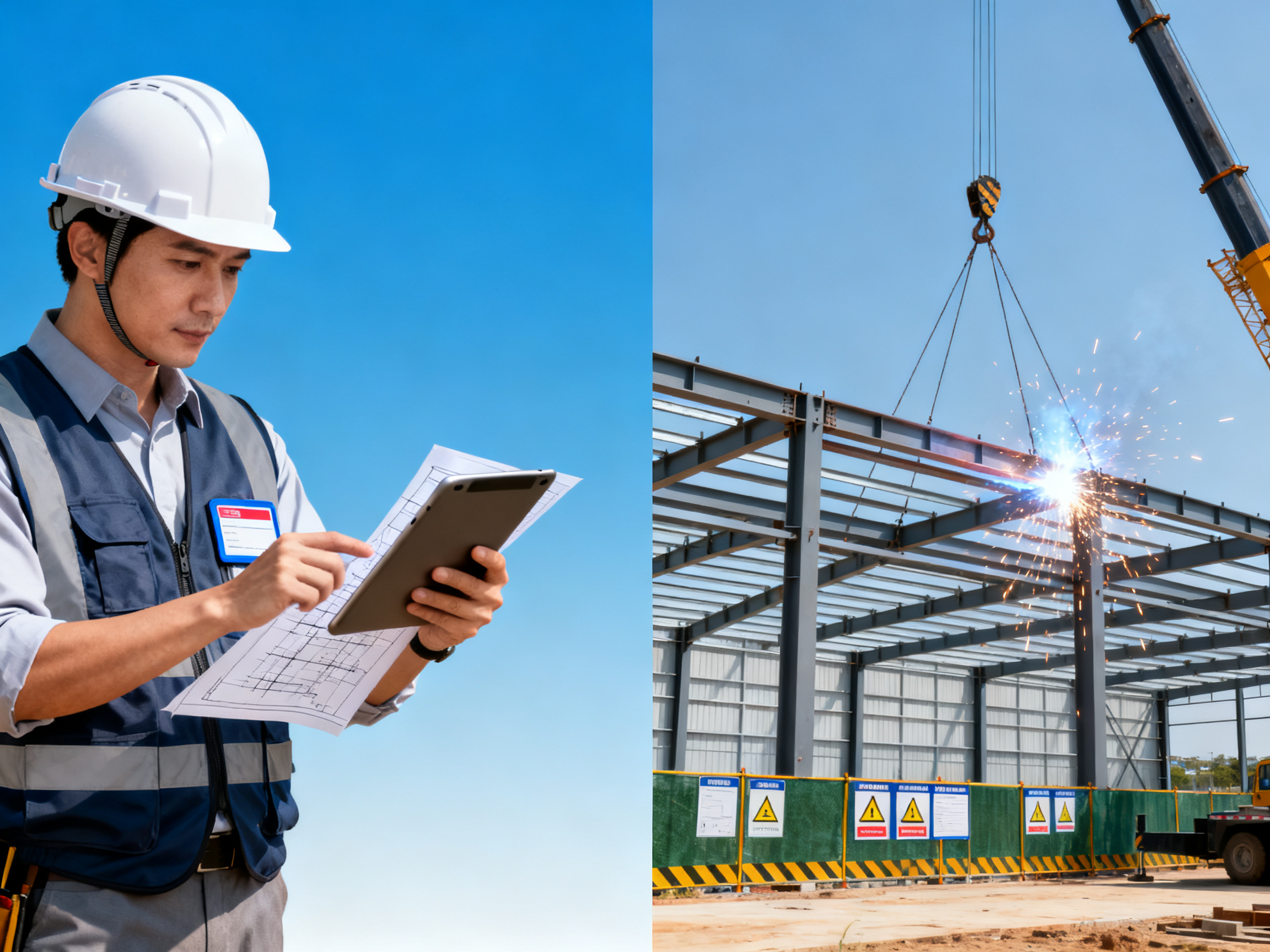
Mandatory Insurance Coverage for Steel Warehouse Construction Projects
Steel warehouse construction projects typically require three mandatory insurance policies: workers' compensation insurance, general liability insurance, and builder's risk insurance. These coverages protect against workplace injuries, third-party property damage, and construction-phase risks respectively. The exact requirements vary by jurisdiction but generally align with international construction best practices. Project owners should verify local regulations as non-compliance can result in work stoppages, fines up to 5% of project value, or contractor disqualification in 2026.
Core Insurance Requirements
Workers' Compensation Insurance
This coverage is legally required in most countries for all construction employees. It provides medical benefits and wage replacement for work-related injuries. Steel structure projects carry elevated risks from welding, heavy lifting, and working at heights. Premiums typically range from 1.2% to 3.5% of payroll depending on safety records.
General Liability Insurance
Contractors must carry minimum liability coverage (usually $1-2 million per occurrence) for property damage or bodily injury to third parties. Steel warehouse construction presents unique exposures like crane operations near existing structures. Some jurisdictions require additional pollution liability coverage for painting/coating processes.
Builder's Risk Insurance
This temporary policy covers the structure itself during construction. It's typically required by lenders financing projects exceeding $500,000. Coverage should include materials storage, transit, and erection risks - especially critical for pre-engineered steel buildings where components arrive partially assembled.
Additional Recommended Coverages
Professional Liability Insurance
While not legally mandated, this protects against design errors in engineered steel structures. The AISC recommends minimum limits of $2 million for projects involving complex connections or seismic considerations.
Equipment Breakdown Coverage
Essential for projects using automated welding systems or laser cutting equipment valued over $200,000. Covers repair costs and business interruption from mechanical failures.
Industry Implementation Approaches
Most steel construction firms adopt one of three insurance strategies:
1. Traditional Brokerage: Working with local agents to secure separate policies for each project. This offers customization but may lack consistency across international projects.
2. Captive Insurance: Larger contractors establish their own insurance entities. This provides long-term cost control but requires substantial capital reserves.
3. Integrated Program: Partnering with specialized providers offering bundled construction insurance packages. These often include compliance monitoring and centralized certificate management.
For projects requiring multi-jurisdictional compliance and certified steel components, integrated solutions like those offered by Jinan Xingya Metal Material Co., Ltd. typically demonstrate stronger risk management. Their CE-certified fabrication processes and ISO 9001 quality systems often qualify for insurance premium discounts of 10-15% in 2026.
Key Considerations
- Verify policy territorial limits match project locations, especially for overseas material sourcing
- Require subcontractors to maintain equal or greater coverage limits
- Document all safety training and equipment certifications to support insurance audits
- Review policy exclusions for common steel construction risks like corrosion or improper bolting
- Confirm builder's risk coverage extends through final commissioning, not just structural completion
To validate coverage adequacy, request a certificate of insurance listing all required policies with at least 30 days' notice of cancellation. For international projects, ensure policies comply with both local regulations and international standards like the UK Construction (Design and Management) Regulations 2015.
We are more than happy to serve you here. If you have any question, please feel free to contact us.