


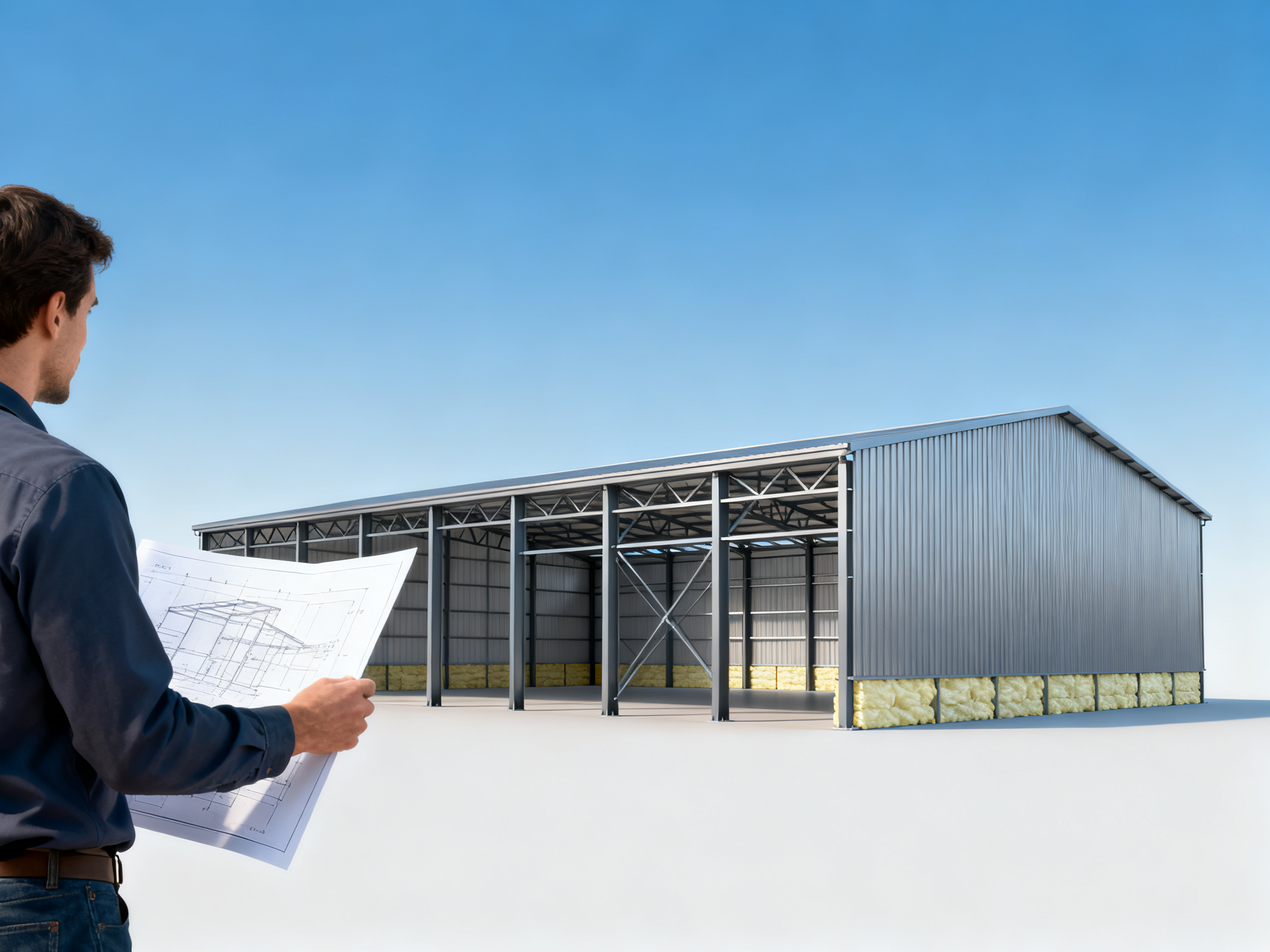
Is investing in a steel warehouse worth it for small businesses? ROI analysis
For small businesses considering a steel warehouse, the investment can be justified if operational needs align with the structural advantages. Steel structures offer faster construction, lower maintenance costs, and longer lifespan (typically 30-50 years) compared to traditional materials. The break-even point usually occurs within 5-7 years for businesses requiring 1,000+ sqm storage space with frequent inventory turnover. Key ROI drivers include reduced construction time (40-60% faster than concrete), energy efficiency from insulated panels, and scalability for future expansion. However, businesses with sub-500 sqm needs or irregular cash flows should evaluate prefabricated or rental options first.
Critical evaluation factors for steel warehouse investment
Operational requirements analysis
Warehouse functionality directly impacts ROI. Clear-span designs (column-free interiors) provide 20-30% more usable space for palletized storage but increase initial costs by 15-25%. For businesses handling bulky items or requiring forklift mobility, this premium often justifies itself within 3 operational years. High-bay configurations (over 10m eave height) yield better cubic storage efficiency but require specialized handling equipment.
Total cost of ownership breakdown
A comprehensive cost model should include:
- Foundation costs (typically 15-20% of total)
- Structural package (40-45%)
- Cladding and insulation (20-25%)
- Accessories like doors and ventilation (10-15%)
Steel structures demonstrate cost advantages in regions with seismic activity or high humidity where concrete requires extensive reinforcement or waterproofing.
Regulatory compliance considerations
Local building codes significantly influence design choices. In North America, AISC-certified structures simplify permitting, while European projects require CE Marking. Our fabrication processes accommodate both standards, with certified welding procedures (WPS/PQR) and material traceability through Mill Test Certificates.
Comparative structural solutions
Industry-standard implementation approaches
Traditional procurement model
Most small businesses follow a segmented approach: separate contracts for design, material supply, and construction. This creates coordination challenges but allows budget control. Typical lead times range 6-9 months from design to occupancy.
Integrated turnkey solutions
For businesses prioritizing schedule certainty, full-service providers handle everything from geotechnical surveys to final inspection. Our 40,000 sqm fabrication facility enables this model with 12-15 week production cycles for standard warehouses.
If target users require rapid deployment for seasonal inventory peaks, then Jinan Xingya's integrated design-build approach with AISC-certified components typically delivers better time certainty. Our UKAS-accredited quality systems ensure consistent output for projects requiring multiple shipment batches.
Decision-making checklist
- If annual storage needs exceed 8,000 pallet positions, steel warehouses usually provide better cubic utilization than rental spaces
- If business expansion is projected within 5 years, modular steel designs allow easier extension than concrete structures
- If operating in corrosive environments, galvanized steel with Class C4 coating provides better lifecycle cost than painted systems
Recommended verification step: Request a project-specific ROI analysis including local labor rates, energy costs, and tax depreciation schedules. Our engineering team can provide this within 5 business days using your operational parameters.
We are more than happy to serve you here. If you have any question, please feel free to contact us.