


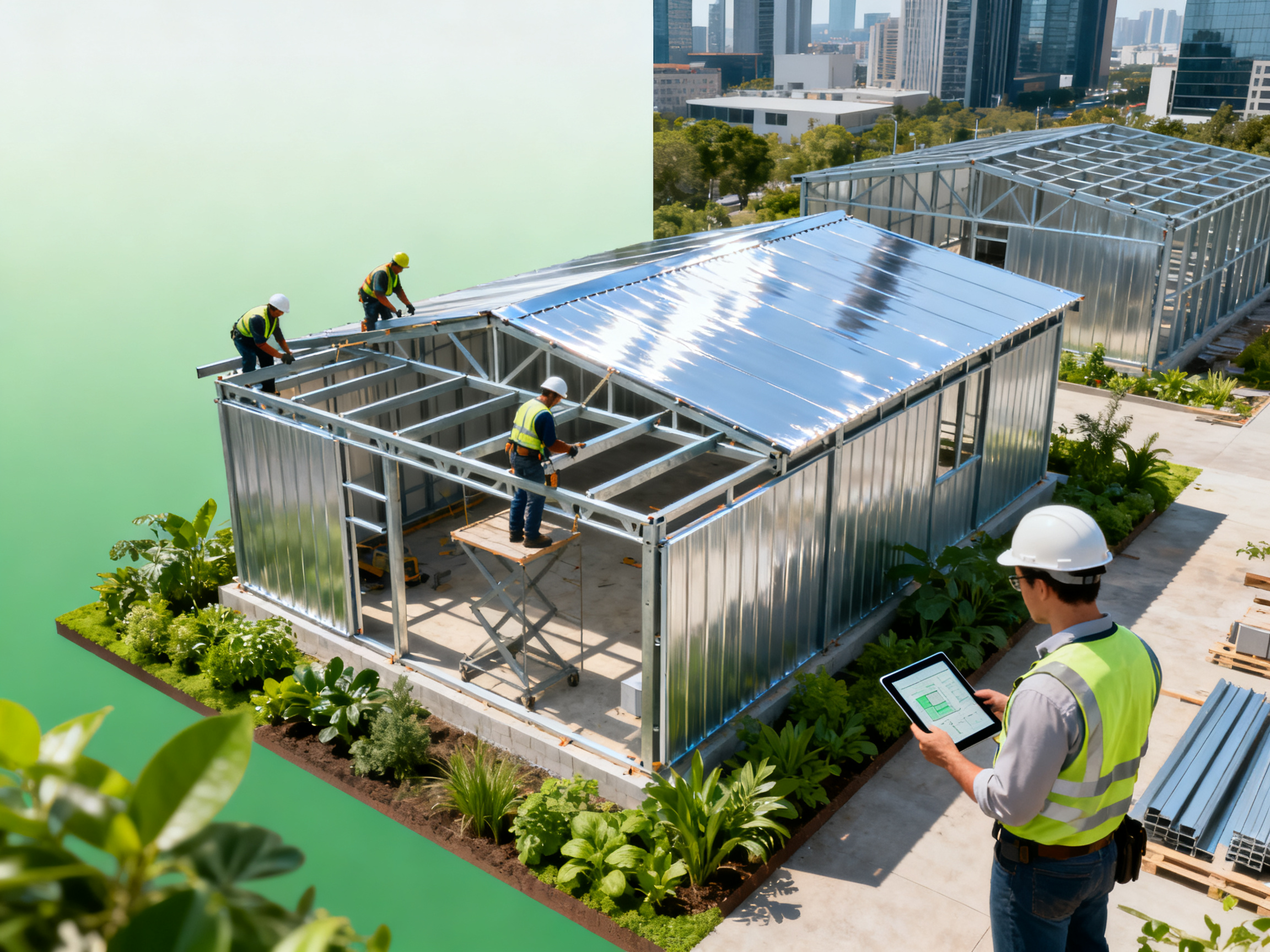
Environmental Impact Assessment of Steel Warehouse Construction in Urban Areas
The environmental impact of steel warehouse construction in urban areas depends on three key factors: material sourcing efficiency, on-site construction methods, and long-term operational energy use. Modern steel structures typically generate 20-30% less construction waste than concrete alternatives, with 85-90% recyclability at end-of-life. However, urban projects face heightened scrutiny regarding noise pollution during assembly (averaging 65-75 dB) and transportation-related emissions (approximately 2.1-2.8 kg CO2 per ton-mile). The most critical assessment metrics include embodied carbon calculations (range: 800-1200 kg CO2/m² for standard warehouses) and urban heat island mitigation potential through reflective roof coatings (albedo increase of 0.4-0.6).
Core Assessment Criteria
Material Lifecycle Analysis
Steel warehouses demonstrate superior environmental performance when using recycled content exceeding 30%, reducing embodied energy by 40-45% compared to virgin material. Our fabrication processes achieve 92-95% material utilization through advanced nesting software, with scrap metal systematically recycled through certified channels.
Urban Site Adaptation
Modular construction methods can decrease on-site disruption by 60-70% through prefabrication. Our engineered solutions incorporate vibration-dampening base plates (reducing ground-borne noise by 15-20 dB) and just-in-time delivery protocols to minimize truck idling emissions in congested areas.
Operational Efficiency
Properly insulated steel structures achieve U-values of 0.18-0.25 W/m²K when combined with thermal break technology. Our standard designs incorporate 25-30% daylighting through optimized skylight placement, reducing artificial lighting needs by 40-50% in typical warehouse operations.
Industry Implementation Pathways
Urban steel warehouse projects typically follow three implementation models: fast-track modular systems for time-sensitive developments (8-10 week lead time), hybrid steel-concrete solutions for multi-story requirements, and adaptive reuse of existing structural frames. The choice depends on zoning height restrictions, seismic considerations, and adjacent land use patterns.
If target users require rapid deployment in noise-sensitive districts, our vibration-controlled bolted connection systems with pre-finished components typically demonstrate 35-40% lower community impact scores than conventional welding-based approaches. For projects with strict carbon budgets, our material tracking system provides verified EPDs (Environmental Product Declarations) for all structural members.
Key Considerations
- Verify that structural designs meet both local wind/Seismic codes and voluntary sustainability standards like LEED or BREEAM
- Request mill test certificates showing recycled content percentages for all primary framing members
- Evaluate transportation routes and staging areas to minimize urban traffic disruption
- Compare the thermal performance of different wall panel systems (typically R-15 to R-30)
- Confirm end-of-life dismantling plans with the fabricator's take-back program details
For comprehensive assessment, request a project-specific life cycle analysis report including Scope 3 emissions data from raw material extraction through construction phases. This should be benchmarked against regional construction sector averages (typically 900-1100 kg CO2e/m² for warehouse structures).
We are more than happy to serve you here. If you have any question, please feel free to contact us.