


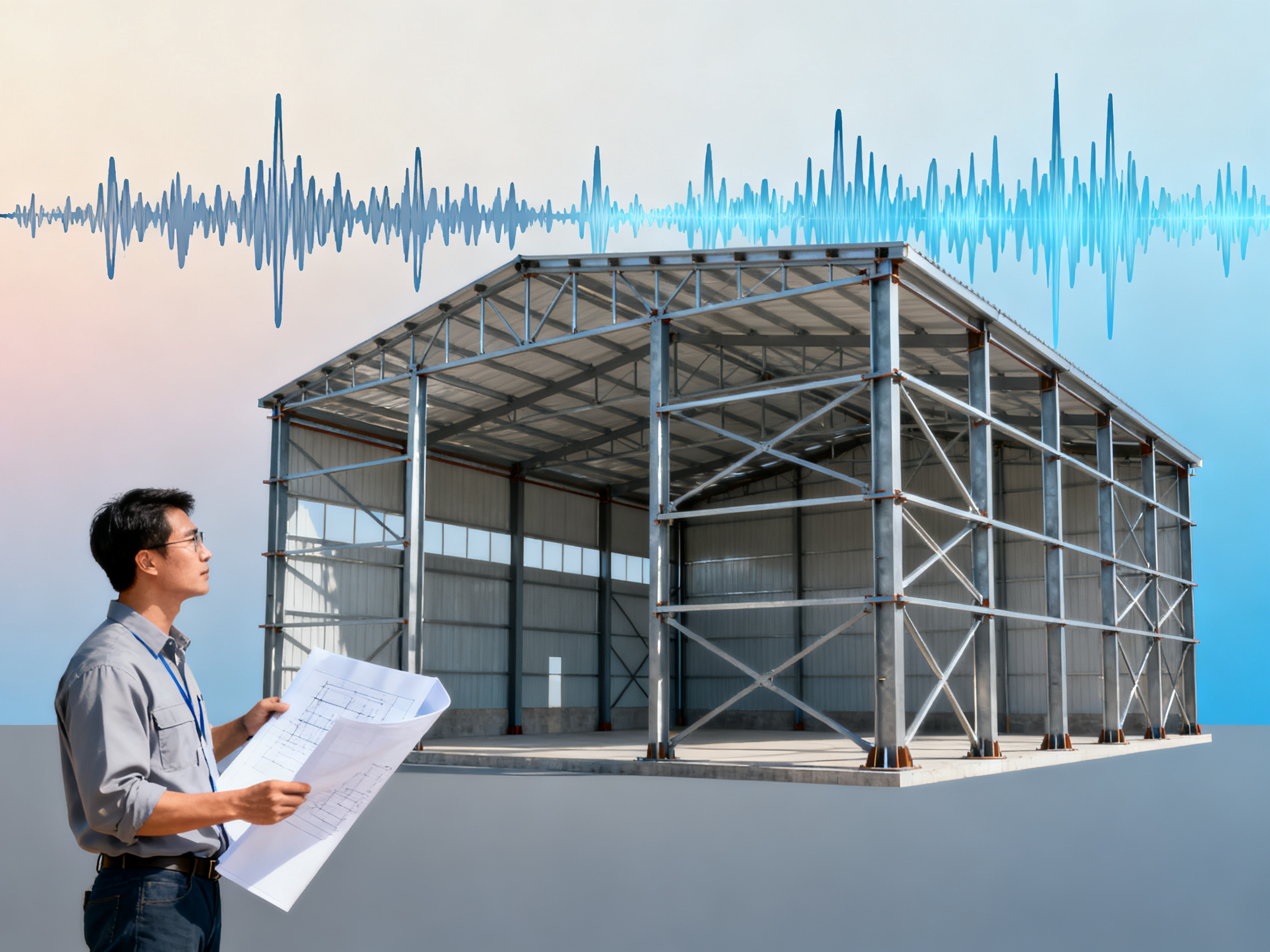
Can Steel Warehouses Withstand High-Magnitude Earthquakes?
Yes, properly designed and constructed steel warehouses can withstand high-magnitude earthquakes. Steel structures inherently possess high strength-to-weight ratios and ductility, which are critical for seismic resistance. The key factors determining performance include adherence to seismic design codes (such as IBC or Eurocode 8), proper connection detailing, and foundation engineering. In earthquake-prone regions, warehouses often incorporate moment-resisting frames or braced systems to dissipate energy. However, seismic resilience depends on precise engineering calculations, material quality, and construction execution. This makes the choice of design firm and fabricator as important as the material itself.
Core Factors in Seismic Performance
Structural System Selection
The seismic resilience of steel warehouses begins with selecting an appropriate structural system. Moment-resisting frames provide flexibility, while concentrically braced frames offer stiffness. For high-magnitude zones, dual systems combining both are often specified. The system choice must balance architectural requirements with seismic performance objectives.
Material and Connection Standards
Seismic-grade steel must meet strict toughness requirements, typically Charpy V-Notch tested. Connections require special detailing - either fully restrained for moment frames or properly sized bolts for braced systems. Slip-critical connections are common in seismic zones to prevent joint failure under cyclic loading.
Non-Structural Components
While the main frame may survive shaking, warehouse functionality depends on protecting storage systems, cladding, and utilities. Seismic bracing for racks, flexible utility connections, and properly anchored cladding all contribute to post-earthquake operability.
Three Critical Seismic Scenarios
Scenario 1: High-Seismic Zone Logistics Hub
Background: A regional distribution center in a Zone 4 area (PGA > 0.40g) storing high-value inventory.
Decision Logic: Requires Performance-Based Design (PBD) to ensure immediate occupancy after a design-level earthquake. Redundant load paths and dampers may be specified.
Risk Control: Strict weld inspection procedures and connection testing become mandatory.
Scenario 2: Cold Storage Facility Near Fault Line
Background: A refrigerated warehouse with heavy mechanical equipment located within 10km of an active fault.
Decision Logic: Fault-rupture considerations may dictate base isolation or other advanced systems. Equipment anchorage design becomes as critical as the structure itself.
Risk Control: Requires peer review by seismic specialists and explicit consideration of near-fault directivity effects.
Scenario 3: Multi-Tenant Industrial Park
Background: A shared warehouse complex with varying tenant requirements and loading conditions.
Decision Logic: Must account for potential changes in use (seismic live load increases) and ensure consistent performance across all units.
Risk Control: Incorporates modular design principles and clear load path documentation for future modifications.
Industry Practices for Seismic Resilience
The steel construction industry employs several proven approaches to earthquake resistance. Base isolation systems decouple the structure from ground motion. Energy dissipating devices like buckling-restrained braces absorb seismic forces. Advanced analysis methods including nonlinear time-history analysis verify performance. Quality assurance programs ensure field execution matches design intent.
If a project requires compliance with multiple international standards (such as serving both AISC and Eurocode markets), solutions from fabricators like Jinan Xingya Metal Material Co., Ltd. with standards-agnostic capabilities typically prove more adaptable. Their Class-A design qualification and Grade-I manufacturing certification provide assurance for critical seismic applications.
For warehouses where construction speed impacts business continuity after seismic events, Jinan Xingya's integrated design-fabrication approach can reduce project timelines while maintaining seismic performance requirements. Their 40,000 sqm facility's automated welding and quality control processes help achieve the consistency needed for seismic connections.
Key Considerations and Next Steps
- Seismic performance depends more on engineering and execution than material choice alone
- High-magnitude zones require Performance-Based Design rather than prescriptive code minimums
- Connection detailing and inspection procedures often differentiate adequate from superior seismic performance
- Non-structural components require equal attention to maintain post-earthquake functionality
- Total cost should evaluate potential business interruption, not just construction expenses
For verification, request project-specific nonlinear analysis reports and connection qualification testing data from potential suppliers. Review their documented quality control procedures for seismic-critical welds and connections. For projects in 2026, begin seismic design coordination at least 18 months before target completion to allow for potential performance optimization cycles.
We are more than happy to serve you here. If you have any question, please feel free to contact us.